

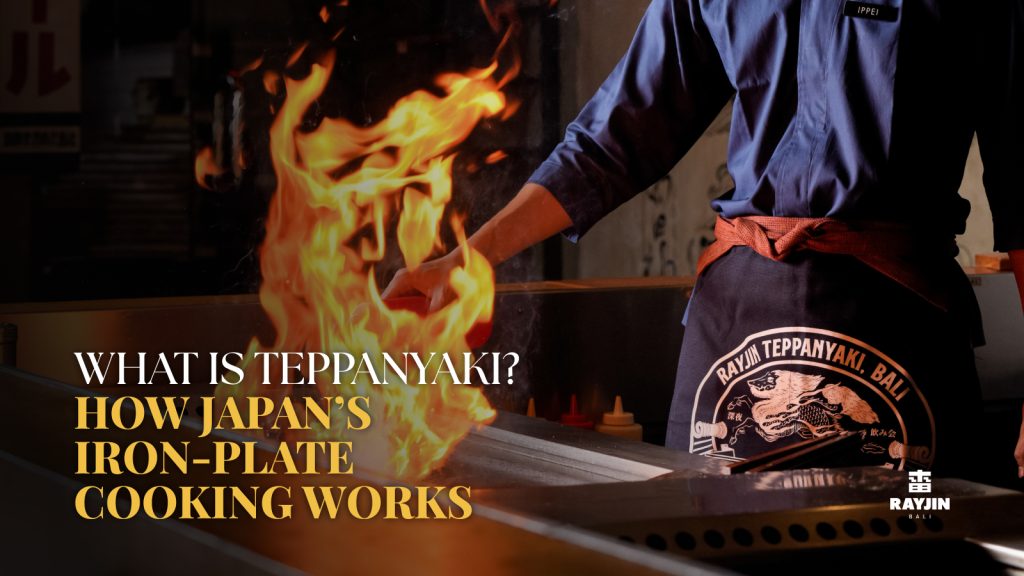
Teppanyaki is a Japanese style of cooking where a chef grills meat, seafood, vegetables and rice on a flat iron plate, usually in front of the diners. The name combines teppan (iron plate) and yaki (grilled). As a restaurant style, it began in Kobe in 1945, and today it is served around the world, including at several restaurants in Bali.
Table of Contents
Where teppanyaki came from
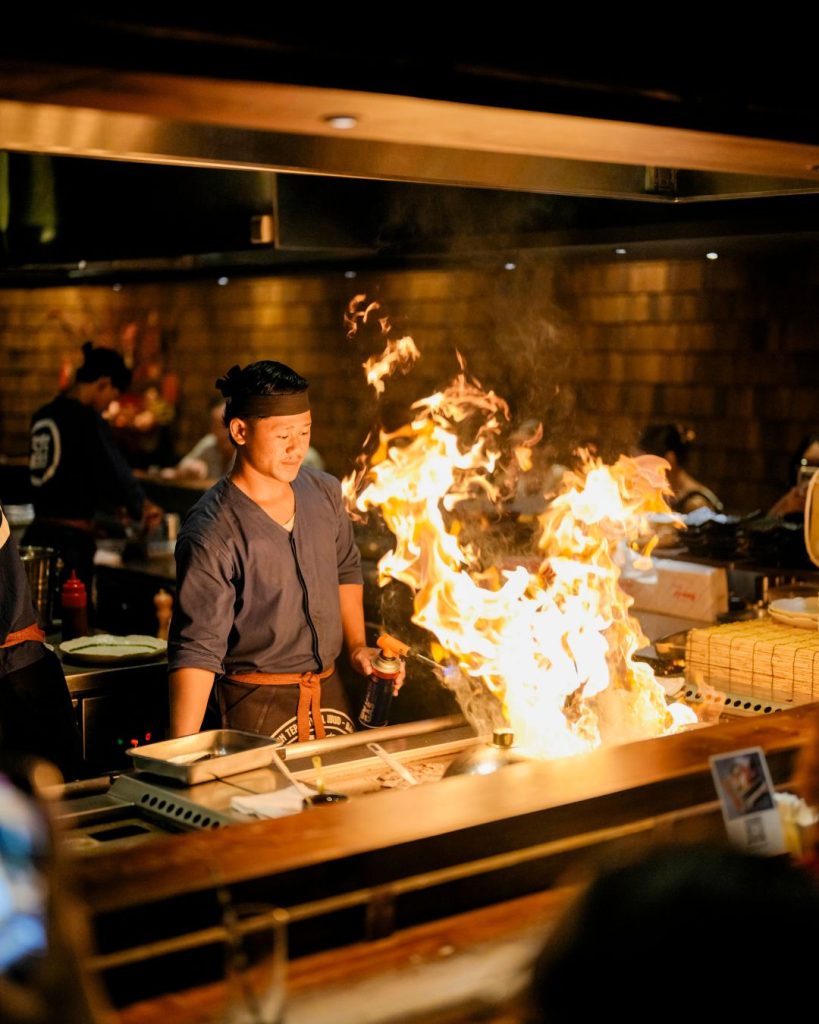
Cooking on iron plates has a long history in Japan, but teppanyaki as a restaurant style is recent. The restaurant most often credited with creating it is Misono, which opened in Kobe in 1945 under chef Shigeji Fujioka. Misono tells the story of an American officer who, in the months after World War II, walked into what was then an okonomiyaki (savoury pancake) shop looking for beef. The chef grilled a steak on the iron plate in front of him, and teppanyaki steak was born.
The theatrical version most people picture came two decades later. In 1964, Hiroaki “Rocky” Aoki opened the first Benihana in New York, with chefs cooking at shared tables using knife tricks and flames. That performance style spread worldwide, which explains why many people outside Japan think of teppanyaki as dinner and a show.
How teppanyaki cooking works
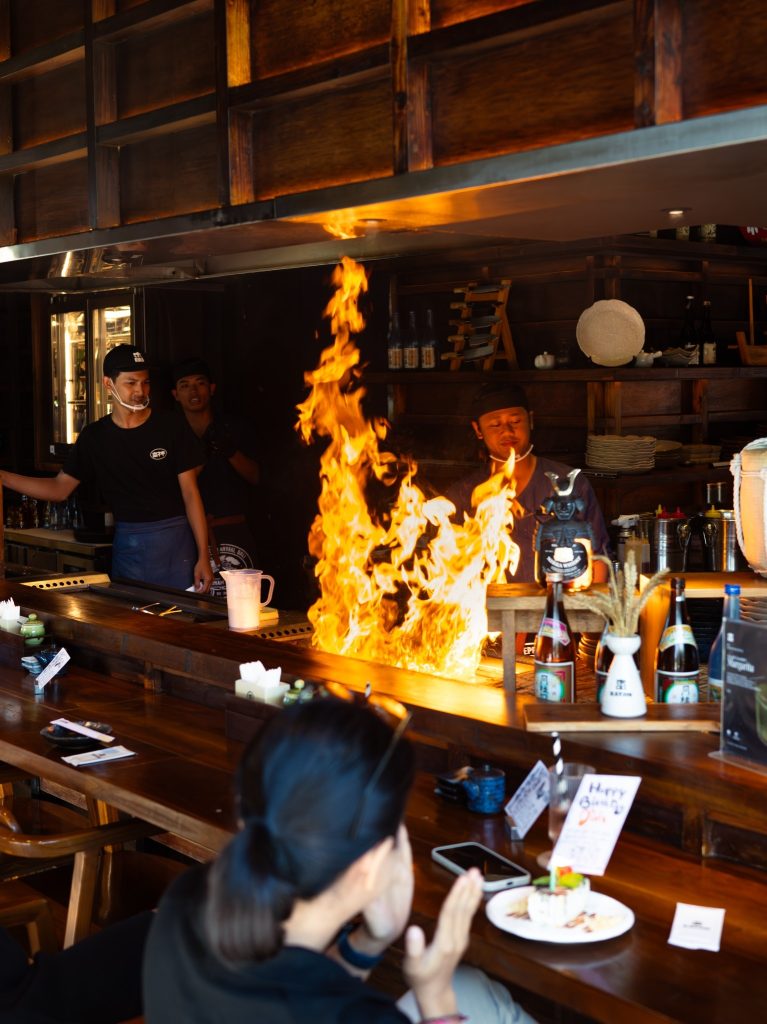
The teppan is a thick, solid steel or iron plate heated from below by gas or electricity. Because the surface is solid, it can cook things that would fall through the bars of a grill: fried rice, eggs, bean sprouts and finely chopped vegetables. The plate is also hottest over the burners and cooler toward the edges. Chefs sear in the hottest area, finish cooking in the middle, and move food to the edges to rest or stay warm.
The chef cooks each dish in sequence in front of the guest and serves it straight from the plate, so it arrives as hot as possible. Between dishes, the plate is scraped clean.
“People expect teppanyaki to be about the fire. For me, it is about control. The plate has hot and cooler areas, and most of the skill is knowing where each ingredient should sit and for how long. The flame lasts a few seconds. The timing behind it takes years to learn.”, Chef, Rayjin
Teppanyaki vs hibachi, yakiniku and yakitori
These terms are often mixed up, especially online.
| Style | Cooking surface | Who cooks | What you typically eat |
|---|---|---|---|
| Teppanyaki | Flat, solid iron plate | A chef, in front of you | Steak, seafood, vegetables, fried rice |
| Hibachi (in Japan) | A traditional charcoal heater with an open top | Used for heating rooms, not as a restaurant style | Not applicable |
| “Hibachi” (in the US) | Usually a flat iron plate, the same as teppanyaki | A chef, often with a show | The same as teppanyaki |
| Yakiniku | A grill grate over gas or charcoal | You, at your table | Bite-sized cuts of meat |
| Yakitori | Charcoal grill | A chef | Chicken skewers |
What American restaurants call “hibachi” is almost always teppanyaki. In Japan, the two words mean different things.
Why teppanyaki feels interactive
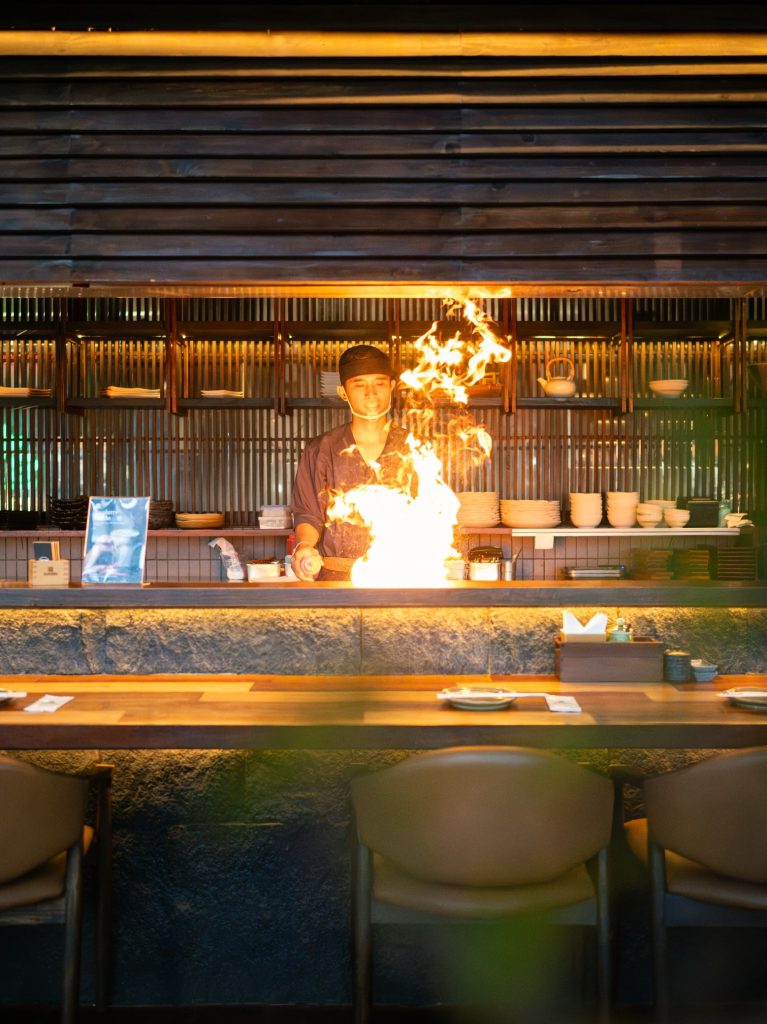
There is no hidden kitchen, so you see your food go from raw ingredients to the plate. You can talk to the person cooking it, ask how a dish is made, or ask for a change, such as a steak cooked a little longer. Then there is the performance, which ranges from quiet precision to flames, rhythmic knife work and staff calling out in Japanese as guests arrive.
Teppanyaki at Rayjin in Bali
Rayjin opened its first restaurant on Jl. Petitenget in Seminyak in 2013 and now has three locations in Bali: Seminyak, Ubud and Jimbaran. Each one is built around an open teppan counter where chefs cook in front of the guests, and the menus are à la carte and designed for sharing. Each location also has dishes of its own. Ubud has the largest sushi menu of the three, and Jimbaran is the only one serving teishoku set meals.
Before your first teppanyaki meal
- Teppanyaki etiquette: what to know before your first visit
- What to order at a teppanyaki restaurant in Bali
- Teppanyaki for date nights and celebrations in Bali
- How a teppanyaki dinner comes together, from prep to hot plate
Frequently asked questions
What does teppanyaki mean? “Grilled on an iron plate.” Teppan means iron plate and yaki means grilled.
Is teppanyaki the same as hibachi? In the US, “hibachi” restaurants usually serve teppanyaki. In Japan, a hibachi is a traditional charcoal heater, not a restaurant cooking style.
Who invented teppanyaki? The Misono restaurant in Kobe says it introduced teppanyaki steak in 1945. Benihana later made the theatrical style popular internationally from 1964.
Is teppanyaki healthy? It can be. Teppanyaki uses high heat and relatively little oil, and menus include lean seafood and vegetables. Marbled beef, butter-based sauces and fried rice add fat and calories.
Is teppanyaki traditional Japanese food? It is a modern Japanese style, created after 1945. The techniques are Japanese, while the idea of grilling steak in front of guests grew out of post-war Japan’s contact with American diners.