
A teppanyaki dinner at Rayjin comes together in three stages. Ingredients are cut, portioned and marinated before service. The iron plate is heated and set up with hotter and cooler zones. Then the chef cooks each dish in a set order in front of the guest. At Rayjin, which has run teppanyaki counters in Bali since 2013, the flame comes near the end of that sequence, after hours of work guests never see.
Table of Contents
Before service: sourcing and prep
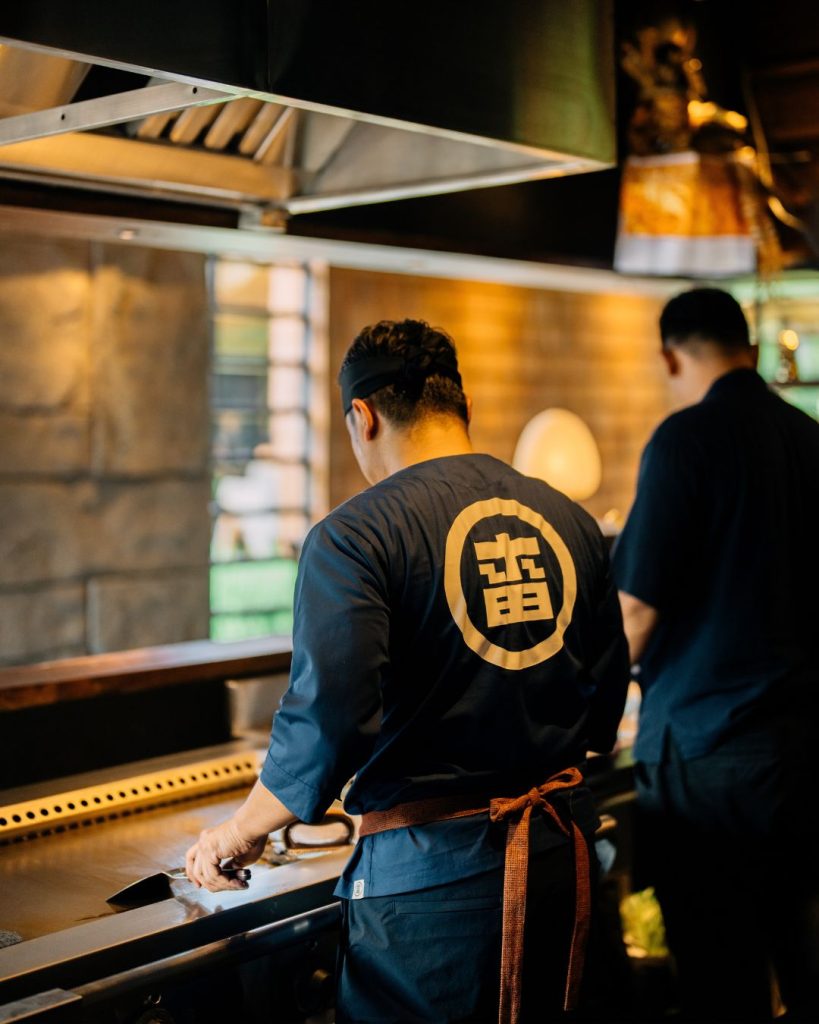
What happens at the counter takes minutes. The work behind it starts in the afternoon.
“Teppanyaki is honest cooking. There is no sauce to hide behind and no back kitchen, so the ingredient has to be right before it reaches the plate. We check every delivery, and anything that isn’t good enough goes back.”, Chef, Rayjin
Teppanyaki depends on mise en place, having every ingredient cut, portioned and ready before the first guest sits down. That preparation is what makes fast cooking in front of a guest possible. For the Meltique Steak, every order is 200 g of beef cut into even cubes. The garlic chips for the Garlic Rice are prepared in advance, and the rice itself is cooked before service so it fries properly on the plate.
“Every cube of beef is cut to the same size. One bigger piece cooks differently from the rest, and at the counter, with the guest watching, there’s no time to fix it. Consistency starts on the cutting board, hours before service.”
The Gindara Misozuke starts earlier still. The black cod sits in a miso marinade ahead of time, so the flavour goes into the fish and the surface caramelises when it hits the heat.
Setting up the plate
The teppan is a thick, flat iron plate heated from below. Before service, the chef heats it, cleans it and oils it. The plate is never one even temperature. The area over the burners is the hottest and is used for searing. The edges are cooler and hold food that is resting or keeping warm.
“We don’t cook by thermometer at the counter. You learn to read the plate: how fast the oil moves, how the garlic sounds when it lands. A new chef spends a long time watching before they cook for guests. The hands learn quicker than the eyes.”
The order of cooking
A teppan meal is cooked in a deliberate sequence, because each stage sets up the next.
- Aromatics first. Garlic goes on early, both as a garnish and to flavour the oil.
- Vegetables and seafood. They cook quickly and are served early. The Gindara Misozuke and the vegetables that come with the steaks are cooked in this stage.
- Beef. Seared on the hottest part of the plate, cooked to each guest’s preferred doneness, and rested briefly at the cooler edge.
- Rice last. Garlic Rice, fried with butter shoyu and garlic chips, goes on near the end, when the plate has picked up flavour from everything cooked before it.
“Guests sometimes ask for the rice first because they’re hungry. We’ll always do it, but I tell them it tastes better at the end. The butter shoyu takes on everything that was cooked on the plate before it.” Chef Rayjin
This sequence is why counter guests are served dish by dish and why it’s best to eat each dish as soon as it arrives.
The flame
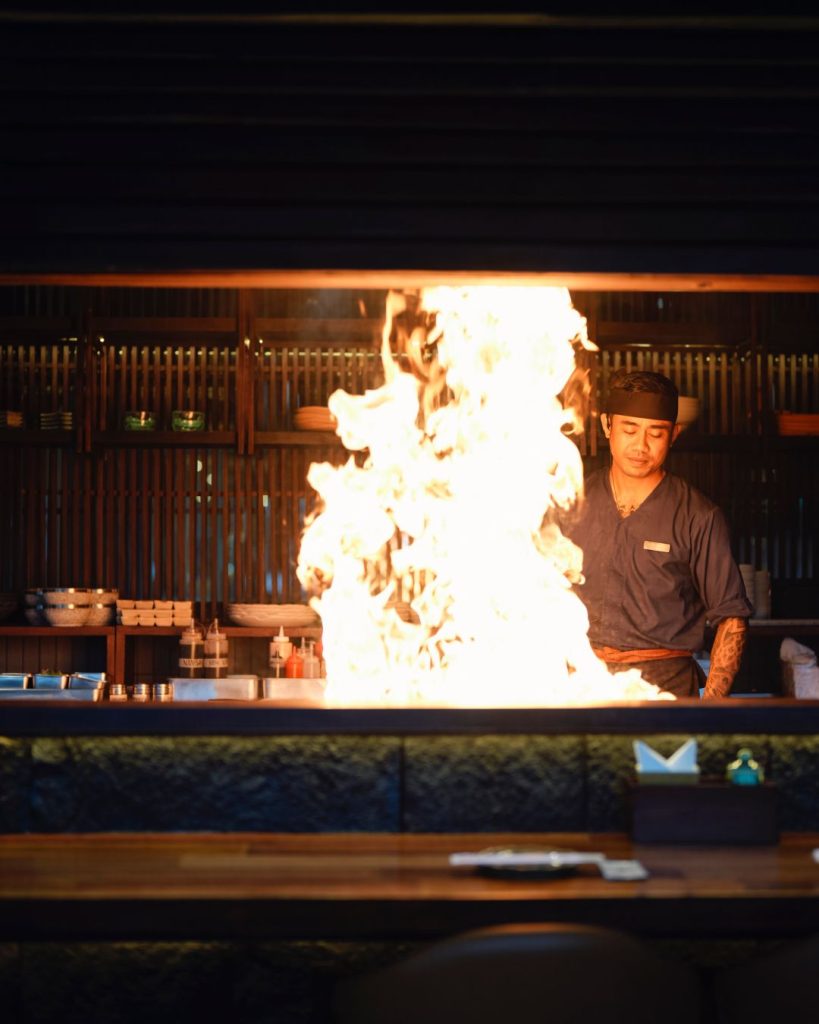
The flame is the moment guests film.
“Is the fire for the guest or for the food? Both, honestly. It looks dramatic, and it does add something: a bit of sweetness, a bit of smoke. But the steak was already cooked properly before the flame went up. The fire finishes it.”
Rayjin also uses a smaller, quieter flame. Several dishes are finished with a kitchen torch, including the flame-seared salmon roe on the Salmon Mentai Don and the aburi (flame-seared) sushi on the Ubud menu. Dishes from the kitchen, such as the gyoza, fried starters and ramen, get no flame at all.
Serving and cleaning
Food goes straight from the plate to the guest, so it arrives as hot as it can be. Several dishes, including the Beef Yakiniku and Creamy Garlic Beef, are served on a sizzling hot plate that keeps cooking at the table. Between dishes and between guests, the chef scrapes the teppan clean, often with a splash of water that lifts residue as it steams. It keeps flavours from carrying over, and it is part of how the kitchen manages allergies on a shared surface.
The team behind the counter
Teppanyaki is team service. At Rayjin, staff greet guests in Japanese as they arrive and call out to each other through the evening as orders move from the kitchen to the counter.
“The calls keep everyone in rhythm. The kitchen knows what’s coming, the counter knows what’s ready, and the guest feels the energy of it. That’s omotenashi for us: looking after people so well they don’t notice the work.”
What this means for your visit
Order at least one dish from the teppan, because that is where the craft and the flame happen. Sit at the counter to watch the full sequence. Give the chef your preferences before the cooking starts, and tell the team about allergies when you book.
See the process in person at Rayjin in Seminyak, Ubud or Jimbaran. New to teppanyaki? Start with What Is Teppanyaki?