

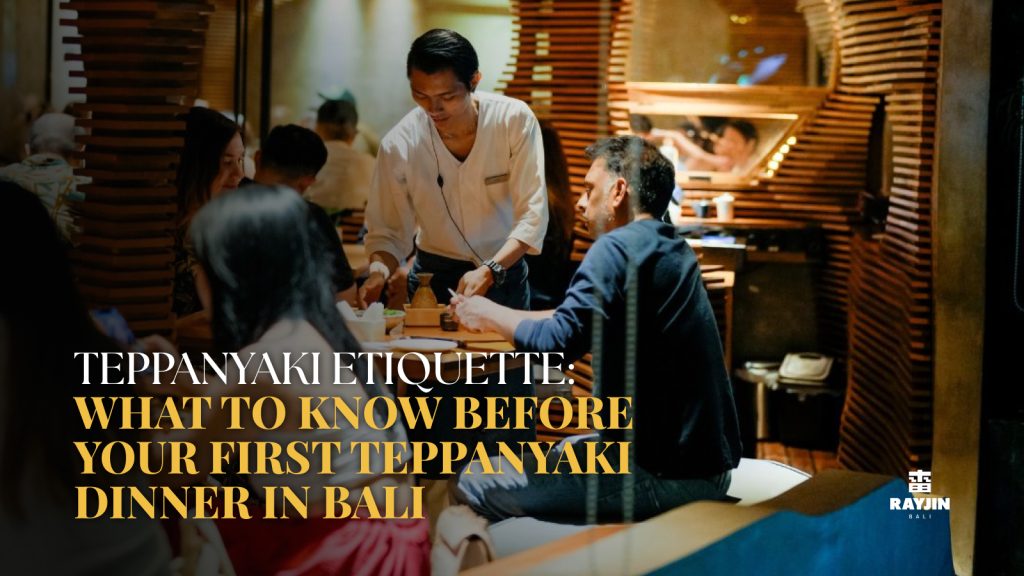
Teppanyaki dinners in Bali are relaxed, and nobody expects you to know Japanese customs. A few habits make the meal smoother: keep clear of the hot plate, tell the chef your preferences before the cooking starts, follow a handful of chopstick rules, and expect service charge and tax to be added to the bill. The rest of the evening is simply watching and eating.
Table of Contents
Arriving: the greeting
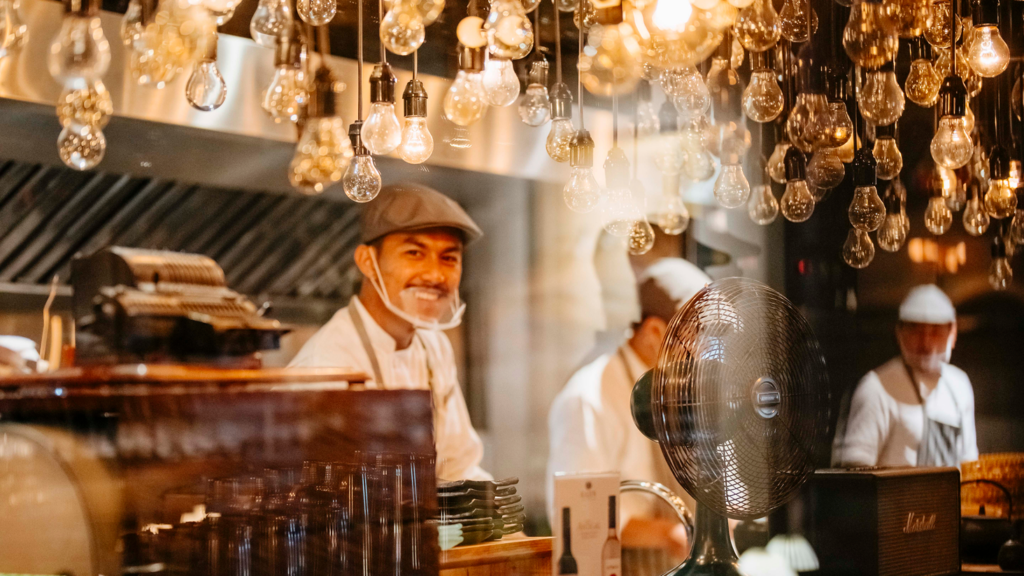
At many Japanese restaurants, including Rayjin, the team calls out a greeting in Japanese as you walk in. The most common is irasshaimase, which means “welcome,” and it is part of omotenashi, the Japanese approach to attentive hospitality. You don’t need to reply. A smile or a nod is plenty. Staff will keep calling to each other through the evening as guests arrive and dishes go out, and none of it needs a response from you.
At the teppan counter
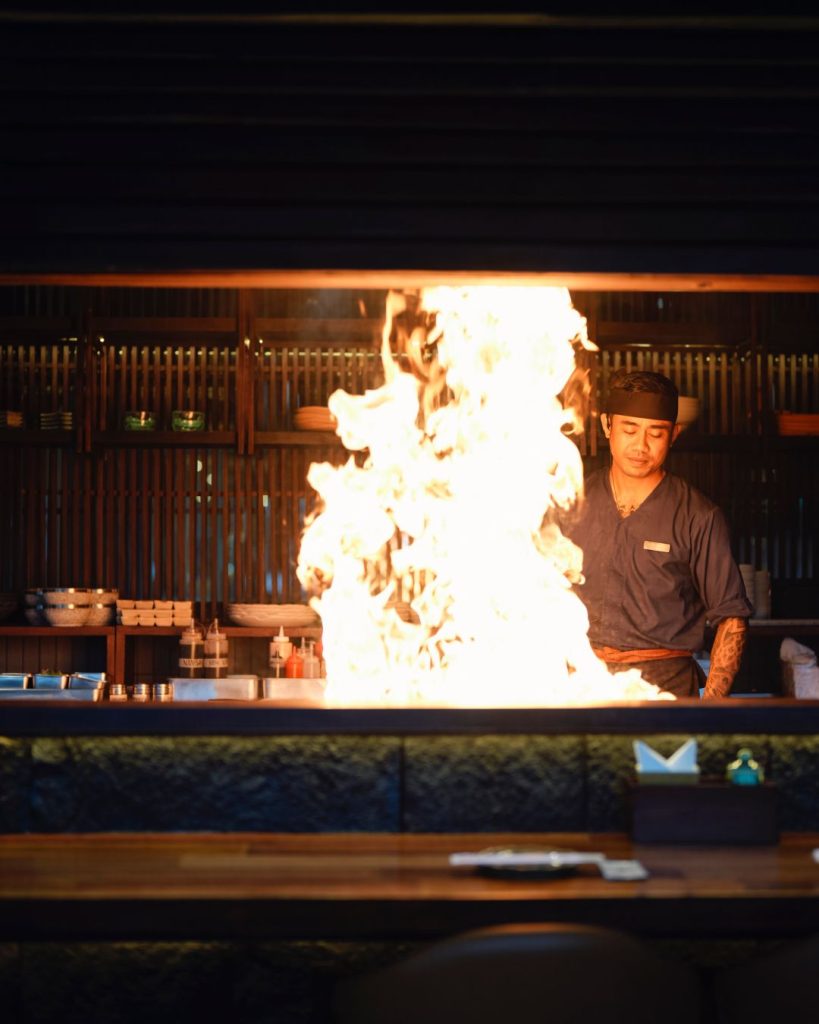
Most teppanyaki etiquette is about safety and about getting the food you want. The teppan stays extremely hot all evening, so keep elbows, sleeves, phones and bags back from the edge, and keep children seated. Tell the chef how you like your steak done, and mention anything you don’t eat, before the cooking begins. Once it starts, the chef works in a fast, fixed sequence.
Allergies are best mentioned twice, once when you book and again at the counter. Teppanyaki is cooked on a shared plate, and the chef needs time to plan around it.
Food at the counter goes straight from the plate to each guest, and it is normal to start eating as soon as yours arrives. Questions about the ingredients or the technique are welcome. Save longer conversations for the moments when the chef isn’t mid-flame. Filming the flame is fine, and most guests do it. Just keep your phone back from the plate.
“Guests sometimes worry they’ll do something wrong at the counter. Honestly, the only rule that really matters is to keep your hands and your phone away from the plate. Everything else, chopsticks, Japanese phrases, all of it, is a bonus, and our team loves it when someone tries a ‘kanpai’.”, Restaurant Manager, Rayjin
Japanese phrases worth knowing
None of these are required, but chefs and staff appreciate them.
| Phrase | Pronunciation | Meaning | When to use it |
|---|---|---|---|
| Itadakimasu | ee-tah-dah-kee-mahs | “I humbly receive” | Before you start eating |
| Kanpai | kahn-pie | “Cheers” | When raising glasses |
| Oishii | oy-shee | “Delicious” | To compliment the food or the chef |
| Sumimasen | soo-mee-mah-sen | “Excuse me” | To get a staff member’s attention |
| Arigatou gozaimasu | ah-ree-gah-toh go-zai-mahs | “Thank you very much” | When served, or when leaving |
| Gochisousama deshita | go-chee-soh-sah-mah desh-tah | “Thank you for the meal” | When you finish or leave |
Chopstick basics
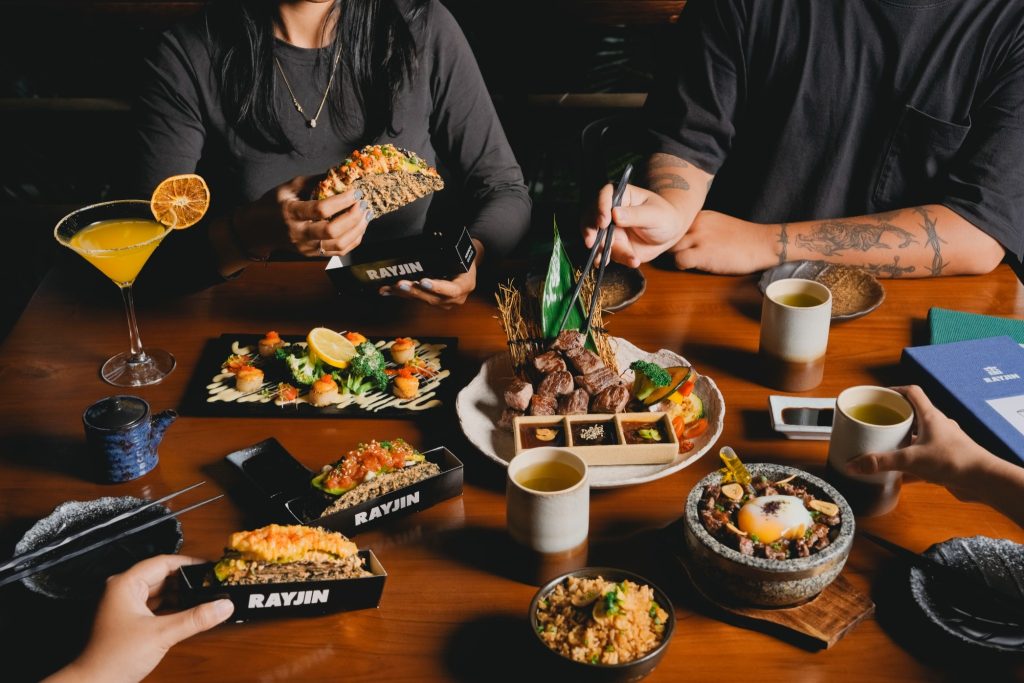
Forks are always available on request, so nobody needs to struggle. For those using chopsticks, four habits are considered bad manners in Japan. Standing chopsticks upright in rice resembles an offering made at funerals. Passing food from your chopsticks to someone else’s mirrors a funeral ritual, so place the food on their plate instead. Pointing or waving with chopsticks is rude, so put them down while you talk. Between bites, rest them on the chopstick rest (hashioki), not across your bowl. For shared plates, use the serving utensils.
Drinks and toasting
In a group, wait until everyone has a drink and someone says kanpai before you start. In Japanese drinking culture, you pour for the people around you and they pour for you. Nobody expects it at a Bali restaurant, but it is a nice gesture when sharing a bottle of sake. Sake can be served cold, at room temperature or warm, and the staff can suggest one to match your food.
Rayjin allows guests to bring their own bottle, with a corkage charge of Rp 150,000 per bottle of wine and Rp 250,000 per bottle of spirits, for bottles up to 720 ml. Outside food isn’t allowed.
Sharing and pacing
Teppanyaki menus in Bali, including Rayjin’s, are built for sharing, and dishes arrive as they’re ready. The easiest approach is to order a first round for the table and add more as you go. Not every dish is cooked on the teppan. Fried starters, sushi and ramen come from the kitchen, while dishes marked “teppan grilled” on the menu are cooked on the plate. See what to order at a teppanyaki restaurant.
Paying and tipping in Bali
Restaurant menus in Bali usually list prices before charges. At Rayjin, a 7% service charge and 10% government tax are added, which comes to roughly 18% on top of the menu total. Rayjin’s menus also list prices in thousands of rupiah, so “125” means Rp 125,000.
Tipping isn’t customary in Japan, and in Bali the service charge already goes to the staff. An extra tip is appreciated but never expected. Cash left with the bill or handed to the team is the simplest way to thank your chef. Most restaurants in Bali’s tourist areas, Rayjin included, accept cash and major credit cards.
What to wear
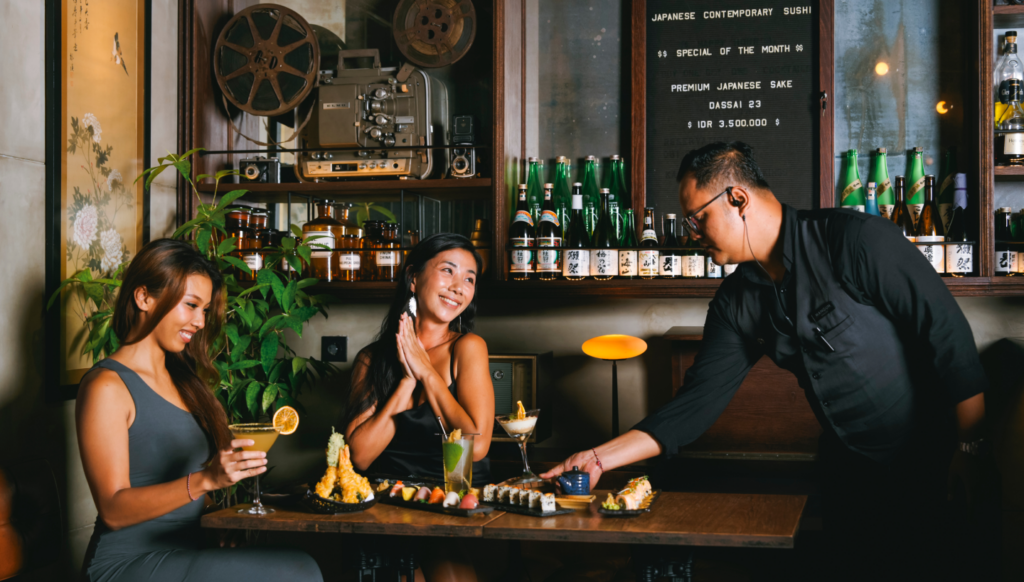
Most teppanyaki restaurants in Bali have no dress code, and smart casual fits everywhere. Counter guests are better off avoiding loose, flowing sleeves, since you sit close to the hot plate.
Frequently asked questions
Do I need to know Japanese etiquette to enjoy teppanyaki? No. Staff don’t expect it. The safety points at the counter are what matter.
Should I tip the teppanyaki chef in Bali? It’s optional. A service charge is already included in the bill.
Can I ask for a fork? Yes. Just ask the staff.
Can I bring my own wine to Rayjin? Yes, with corkage of Rp 150,000 per bottle of wine or Rp 250,000 per bottle of spirits (up to 720 ml).
Can I take photos and videos during the show? Yes. Keep your phone back from the hot plate.
Ready for your first teppanyaki dinner? Book Rayjin in Seminyak, Ubud or Jimbaran. New to the cuisine? Start with What Is Teppanyaki?